


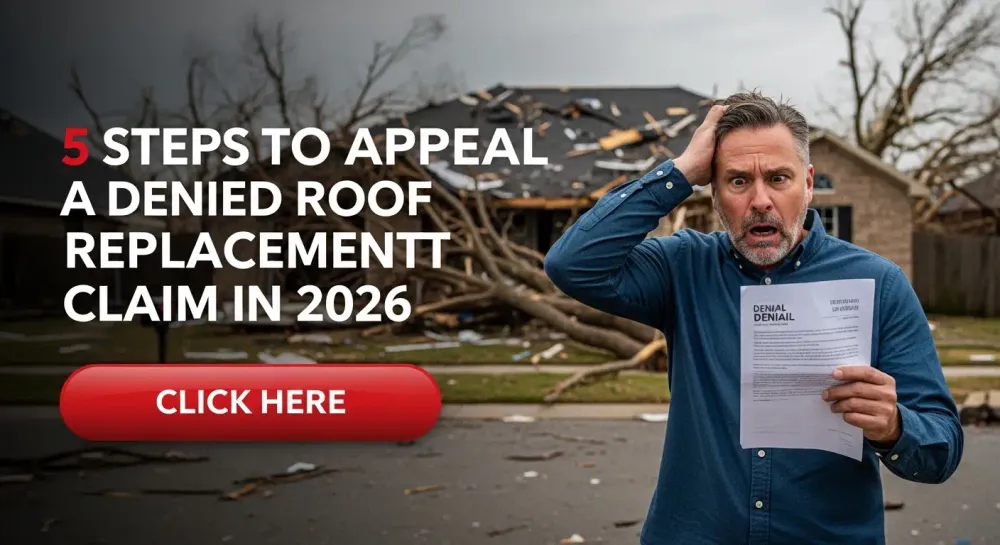
You pay your insurance premiums on time every single month, trusting with absolute certainty that your most valuable financial asset is fully protected against the unpredictable forces of nature. Then, a massive, severe weather event tears through your neighborhood. Shingles are scattered violently across your front lawn, water is beginning to pool in your attic, and you immediately call your agent to file an urgent claim. Weeks later, you open an envelope only to find a formal, cold rejection letter. Panic sets in instantly. Figuring out exactly what to do when storm damage roof replacement insurance claim denied notices arrive in your mailbox is one of the most stressful, infuriating experiences a homeowner can face.
However, you are not out of options, and a denial is almost never the final word. Insurance carriers are massive financial institutions designed to protect their own bottom line, often defaulting to initial rejections based on technicalities, software algorithms, or incredibly rushed field inspections. This comprehensive, battle-tested guide will walk you through the precise, actionable steps you must take to forcefully appeal their decision, leverage licensed industry experts, and secure the massive financial payout you legally deserve.
Decoding the Initial Rejection: Why Did They Say No?
Before you can effectively fight back against a multi-billion dollar corporation, you need to deeply understand your opponent's internal strategy and exactly how they classify property damage.
The Battle of Wear and Tear vs. Sudden Peril
Insurance companies rigorously categorize damage into two distinct buckets: covered sudden perils (like windstorms, massive hail strikes, or falling trees) and strictly excluded conditions (like normal wear and tear, manufacturing defects, or improper original installation). When a corporate adjuster visits your property, they are actively looking for evidence of the latter to justify closing your file.
If your asphalt shingles show signs of extensive blistering from poor attic ventilation rather than mechanical bruising from hail, the claim is instantly flagged for denial. Furthermore, the chronological age of your roofing materials plays a highly critical role. If your roof is twenty years old and inherently brittle, the carrier will aggressively argue that the storm merely exposed an existing, long-overdue need for routine maintenance, rather than causing a sudden, catastrophic structural failure. Understanding this deeply cynical corporate mindset is the absolute foundation of building a bulletproof, mathematically undeniable appeal.
Cosmetic Damage Exclusions and Fine Print
In recent years, carriers have aggressively updated their policies to include "Cosmetic Damage Exclusions." This treacherous loophole allows them to deny replacing a roof if the storm only affected the appearance of the materials without compromising their core water-shedding functionality. If hail dents your metal roofing panels but doesn't puncture the underlying membrane, they will claim it is purely an aesthetic issue. Defeating this specific argument requires deep technical knowledge of how surface impacts eventually degrade structural integrity over time.
Step 1: Audit Your Policy and the Adjuster’s Report
Your first offensive move is not to call your agent and yell; it is to become an overnight, meticulous expert on your specific contractual language.
Understanding ACV vs. RCV Payout Structures
Locate your main Declarations Page. This crucial document outlines your exact coverages, your financial limits, and your mandatory deductible. More importantly, you need to determine if you hold an Actual Cash Value (ACV) policy or a Replacement Cost Value (RCV) policy. An ACV policy will only legally pay out the heavily depreciated value of your old, damaged roof, which is often a mere fraction of the true cost of a brand-new installation. An RCV policy, however, covers the total, real-world cost of replacing the materials at today's inflated market rates.
Scrutinizing the Formal Denial Letter
Next, fiercely scrutinize the denial letter. State laws require insurance carriers to provide a highly specific, written explanation citing the exact clause, page, and paragraph in your policy that justifies the rejection. Did they cite a "Pre-existing Condition" due to unsealed flashing around your chimney? Highlight these exact phrases. Your entire appeal strategy will be carefully structured around dismantling these specific corporate arguments with hard, empirical, and undeniable evidence.
Step 2: Commission a Comprehensive Roof Damage Assessment
The adjuster sent by your carrier is not your friend, nor are they an impartial judge; they are a salaried employee heavily incentivized to protect the company's financial reserves. To counter their biased narrative, you must bring your own experts to the battlefield.
Forensic Analysis vs. Free Visual Inspections
You must immediately commission an independent, highly detailed Roof Damage Assessment. This cannot be a free, five-minute visual inspection from a local, door-knocking roofing salesman who just wants a quick contract. You need a certified, experienced roofing inspector who utilizes forensic engineering techniques.
A proper, legally defensible assessment involves utilizing drone photography to capture high-definition, top-down imagery of the entire structure. The inspector will conduct physical core sampling to check for hidden delamination beneath the shingle surface and use specialized chalking techniques to vividly highlight micro-fractures caused by extreme wind uplift or sharp hail strikes.
Documenting Collateral Storm Damage
Furthermore, a true professional will obsessively document the collateral damage—checking soft metals like aluminum gutters, copper downspouts, exterior HVAC fins, and window screens. Corporate adjusters often "conveniently" overlook these elements to keep the claim total low. This exhaustive, multi-page report becomes the empirical foundation of your dispute. When you present undeniable, photographic proof of sudden mechanical damage mapped across a standardized 10x10 test square, it becomes legally perilous for the carrier to stubbornly maintain their denial.
Step 3: Mitigate Losses with Emergency Tarping Services
While you are fighting this grueling bureaucratic war, your property remains highly vulnerable to the elements. You have a legal duty to protect it, even while the carrier argues with you.
The Danger of Failure to Mitigate Clauses
If you allow secondary water intrusion to completely ruin your interior drywall, blown-in insulation, and expensive hardwood floors after the initial storm, your carrier will aggressively deny those secondary interior claims based on "Failure to Mitigate Damages." Every single homeowner's policy includes a strict, non-negotiable clause requiring the policyholder to take reasonable, immediate steps to prevent further loss following an event.
Securing Professional Temporary Protection
This means you must immediately secure your home with professional Emergency Tarping Services. Do not, under any circumstances, attempt to climb onto a severely compromised, slippery structure yourself. Hire a licensed, fully insured contractor to correctly install heavy-duty shrink-wrap or commercial-grade tarps over the exposed decking.
Keep every single invoice and photograph the temporary repairs from multiple angles. When your appeal is ultimately successful, these emergency mitigation costs are almost always fully reimbursable under your standard policy limits. Taking this proactive step proves to the carrier (and potentially a judge in the future) that you are acting in good faith and strictly adhering to your contractual obligations.
Step 4: Bring in a Public Insurance Adjuster
If your carrier flat-out refuses to budge even after you submit your independent forensic evidence, it is time to bring in the heavy, professional artillery.
Leveling the Playing Field with Corporate Desks
You need to hire a licensed Public Insurance Adjuster. Unlike the corporate adjuster who callously rejected your claim, a public adjuster is legally licensed by the state to represent you, the policyholder, exclusively. They are completely fluent in the complex, highly specific, and often manipulative language of insurance contracts and know exactly how to ruthlessly negotiate with stubborn corporate desks.
A public adjuster will completely take over all communication with your carrier. They will re-measure your roof using satellite data, cross-reference constantly changing local building codes that might legally mandate a full decking replacement, and generate a hyper-detailed, line-item estimate using Xactimate (the exact same proprietary pricing software the massive insurance companies use).
The Dangers of Deductible Fraud
A crucial warning regarding finances at this volatile stage: be incredibly wary of shady roofing contractors who aggressively promise an Insurance Deductible Waiver. In almost every jurisdiction, it is classified as a felony for a contractor to artificially inflate their repair estimate to secretly absorb your deductible. A reputable public adjuster will ensure your claim is valued correctly, ethically, and legally, protecting you from unintentional insurance fraud while simultaneously maximizing your legitimate financial payout. They typically work on a strict contingency fee basis, taking a small percentage of the final settlement, meaning they will fight aggressively to secure every single dollar you are owed.
Step 5: File the Formal Appeal and Prepare for Escalation
With your public adjuster leading the charge and your forensic evidence meticulously organized, you will formally request a re-inspection with a different, higher-tier corporate adjuster.
The Re-Inspection and Appraisal Clause
During this critical second visit, your public adjuster will physically be on the roof with the corporate representative, pointing out every single granular defect and refusing to let them ignore the physical evidence. If the carrier still acts in bad faith and issues a second, completely unjustified denial, your adjuster might invoke the "Appraisal Clause" found in your policy, forcing the dispute into a binding arbitration process overseen by a neutral third-party umpire.
The Role of the State Department of Insurance
If the carrier continues to act in bad faith, you must escalate the situation completely outside of their internal hierarchy. File a formal, documented complaint with your state's Department of Insurance. This powerful regulatory body oversees carrier conduct and takes bad faith claims very seriously. A formal inquiry from the state government often forces the carrier's internal legal department to independently review the file, overriding the claims department entirely to avoid massive fines and public regulatory scrutiny. If all administrative avenues completely fail, your final, nuclear recourse is litigation, hiring a specialized property dispute attorney to file a massive breach of contract lawsuit.
Conclusion
Receiving a cold rejection letter is a completely demoralizing experience, but it is merely the opening move in a high-stakes, highly complex financial negotiation. Knowing exactly what to do when storm damage roof replacement insurance claim denied paperwork arrives is the defining difference between absorbing a devastating, life-altering out-of-pocket expense and successfully restoring your home to its pre-storm, pristine condition. By thoroughly auditing your policy language, securing independent forensic evidence, mitigating your ongoing physical risks, and leveraging the immense expertise of a licensed public adjuster, you flip the power dynamic entirely. Do not ever let a corporate algorithm dictate the safety, security, and value of your family's home. Fight back with hard facts, relentless persistence, and professional legal advocacy. Have you recently battled your insurance company over a massive roof claim? Share your strategies, deep frustrations, and eventual victories in the comments below!
Roofing, Insurance Claim Denied, Public Insurance Adjuster, Roof Replacement, Storm Damage