


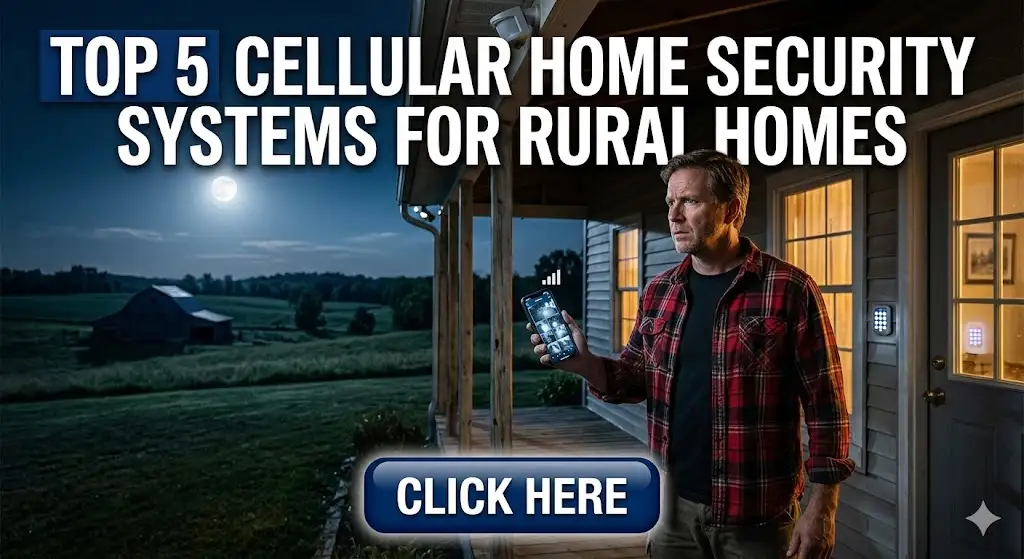
Living miles from the nearest neighbor is peaceful — until something goes wrong at 2 AM and your WiFi-dependent alarm system does absolutely nothing.
If you're searching for the best monitored home security systems for rural areas with no WiFi, you've landed in exactly the right place. Whether you just experienced a break-in or you're simply done feeling vulnerable out in the countryside, cellular home security systems are built for exactly your situation. No broadband. No cable. No problem.
Let's break down the top five options, what makes each one worth your money, and some insider tips that most review sites won't tell you.
Why Rural Homes Need Cellular Security (Not WiFi-Based)
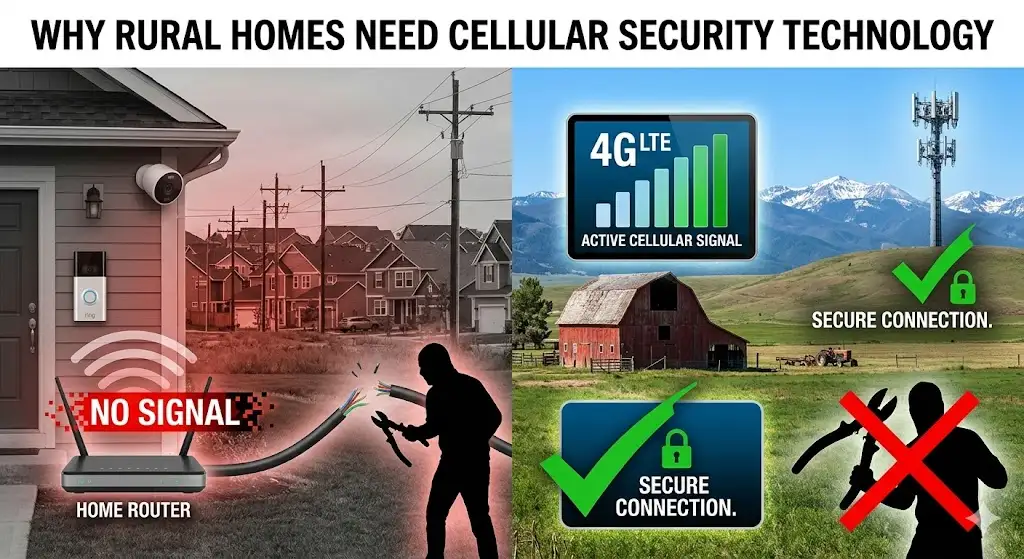
Here's the thing most people don't realize: the majority of popular home security brands — Ring, Nest, SimpliSafe's base package — lean heavily on your home internet connection. Out in rural areas, that's a dealbreaker.
Cellular-based systems use 4G LTE networks (the same technology your phone uses) to send signals directly to a monitoring center. No router required. No broadband subscription. Just consistent, real-time protection even if you're 40 miles from the nearest town.
An added bonus? Cellular systems are harder to defeat. A burglar can't cut your phone line or kill your WiFi to disable them.
Top 5 Cellular Home Security Systems for Rural Homes
1. ADT Command — Best Overall for Rural Monitored Protection
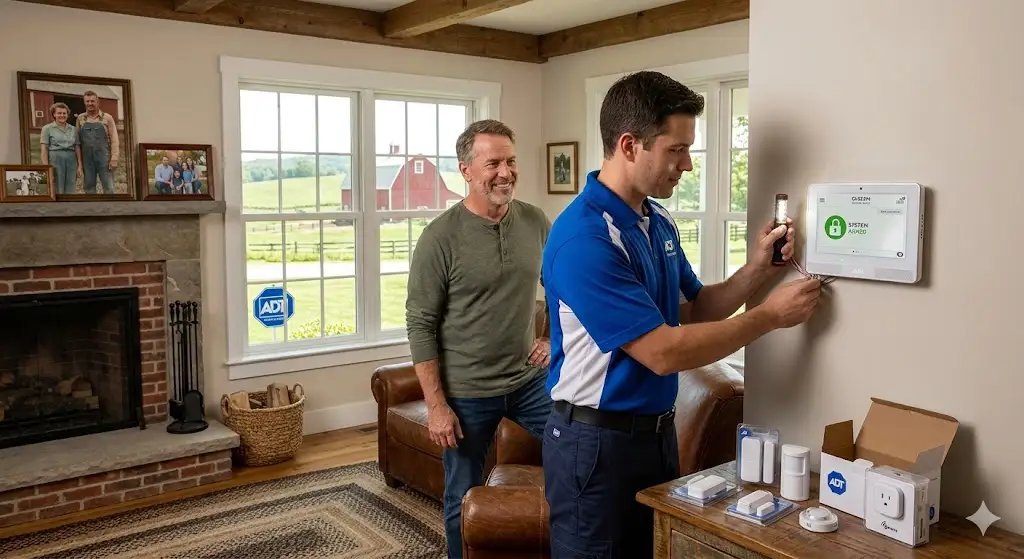
If you've heard one name in home security, it's ADT. And for good reason.
ADT's Command platform operates entirely on cellular backup, meaning your home stays protected even during internet outages. What sets ADT apart for rural homeowners is their 24/7 professional monitoring, which doesn't just call you — it dispatches emergency services directly.
Key features:
- Dual-path communication (cellular + broadband if available)
- Motion detectors, door/window sensors, glass-break sensors
- Smart home integration (Z-Wave compatible)
- Professional installation available nationwide
One thing to know: ADT works through ADT Authorized Dealers in many areas, which can sometimes get you better equipment pricing or installation deals than going direct. Worth asking about when you call.
Home Security Monitoring Contracts: ADT typically requires a 36-month contract. Read the fine print, but for rural homeowners who want rock-solid monitoring, the long-term commitment is usually worth it.
💡 ADT customers also frequently qualify for a Burglary Insurance Discount of up to 20% on homeowners insurance. Ask your insurer — it can offset the monthly cost significantly.
2. Frontpoint — Best for DIY Setup Without Compromising on Monitoring
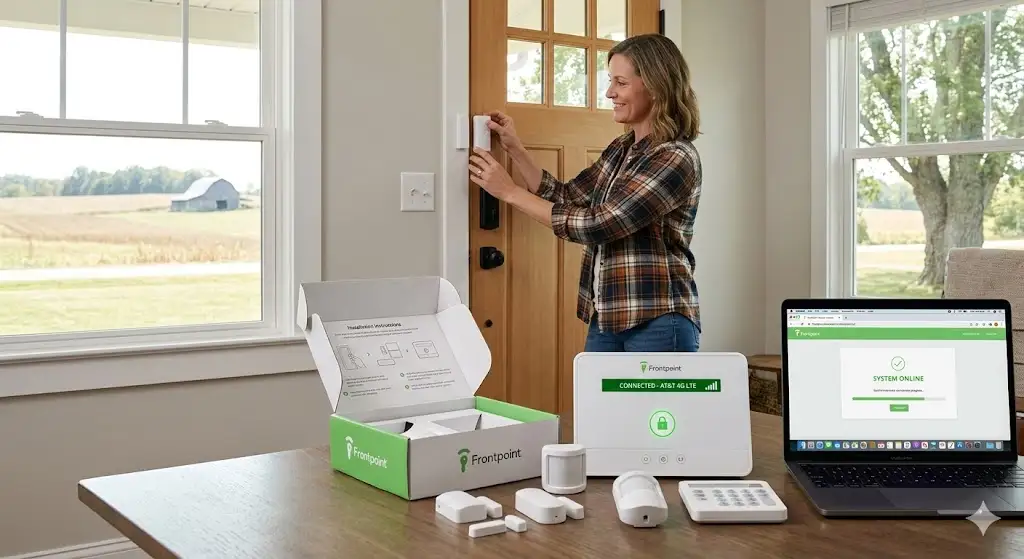
Frontpoint ships everything to your door. You install it yourself in under an hour, and the moment it's active, their monitoring center has eyes on your property.
Their system runs on AT&T's 4G LTE cellular network exclusively — zero dependence on home internet. For rural areas in the Midwest, Southeast, or mountain regions where AT&T has solid rural coverage, Frontpoint is genuinely excellent.
Key features:
- 100% cellular, no WiFi required
- Crash-and-smash protection (system alerts monitoring center before it can be disabled)
- No professional installation needed
- Flexible Home Security Monitoring Contracts starting at 1 year
The equipment is solid, the app is clean, and customer service actually answers the phone. That last point matters more than people think.
3. Cove Security — Best Budget-Friendly Cellular Option
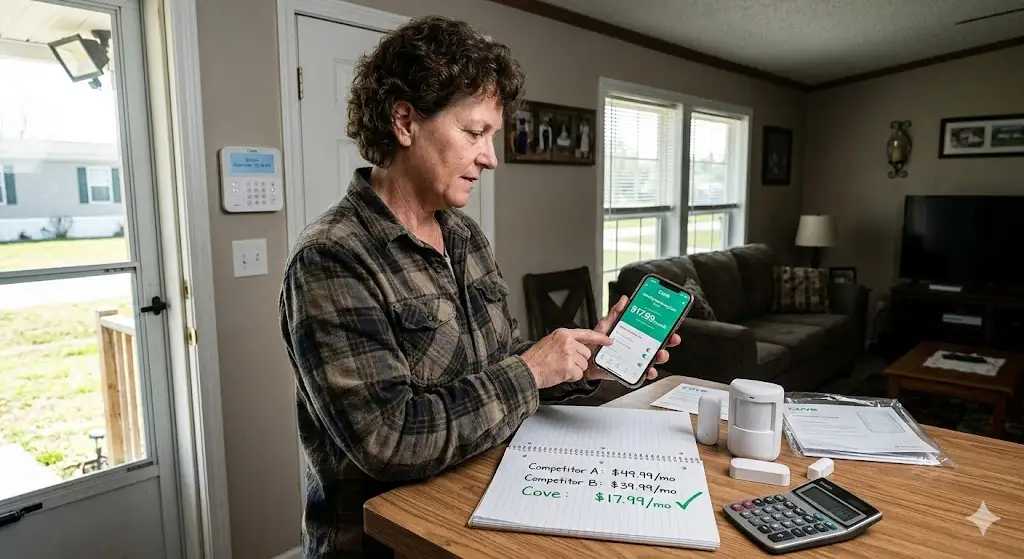
Not everyone wants to spend $50/month on monitoring fees. Cove gets it.
Cove's monitoring plans start around $17.99/month with full cellular backup, making it one of the most affordable professionally monitored systems available. You still get door sensors, motion detectors, a loud siren, and real dispatching — just without the premium price tag.
Key features:
- 4G LTE cellular monitoring
- Simple DIY setup (average install: 30 minutes)
- No long-term contracts required
- Fire, flood, and CO detection available
If you're in a tight budget situation after dealing with a break-in, Cove lets you rebuild your sense of security without breaking the bank. Pair it with better exterior lighting and reinforced door frames and you've got a genuinely formidable setup.
4. Abode — Best for Tech-Savvy Rural Homeowners
Abode is a bit of an underdog, but it's earned a cult following among homeowners who want flexibility without being locked into rigid contracts.
The system supports cellular backup through an optional add-on gateway, and it integrates with more smart home platforms than almost any competitor — Google Home, Amazon Alexa, Apple HomeKit, Z-Wave, Zigbee. If you're building out a full smart home in a rural property, Abode is the foundation worth considering.
Key features:
- Optional cellular backup (CellLink add-on)
- Professional monitoring available but not required
- Supports local automations even without internet
- No mandatory long-term contracts
One caveat: cellular coverage depends on which network your area supports. Abode uses T-Mobile's LTE network, so check coverage maps for your specific county before purchasing.
5. Brinks Home — Best for Established Rural Communities and Farms
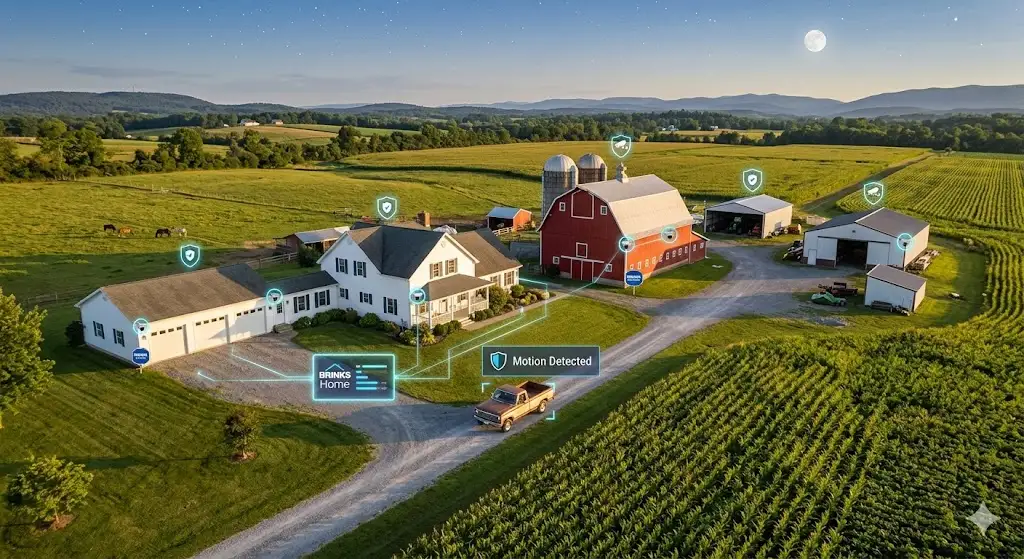
Brinks has been quietly building a strong rural presence, particularly among farmsteads and large-property owners who need sensors spread across significant square footage.
Their SmartSecurity Essential system is built around cellular-first communication, and their monitoring infrastructure is one of the most redundant in the industry — multiple monitoring centers across the US mean your alarm gets answered even during regional disasters.
Key features:
- Cellular-first architecture
- Outdoor cameras with cellular data transmission
- Compatible with large properties (barns, outbuildings, detached garages)
- Home Security Monitoring Contracts available in 12, 24, or 36-month terms
Brinks also has strong relationships with insurance carriers, so if you're pursuing a Burglary Insurance Discount, mention Brinks specifically to your agent.
What About Internet? Should You Consider Satellite?
Here's a question that comes up constantly in rural security discussions: should I just get satellite internet and use a regular system?
Honest answer — it depends.
Satellite Internet Providers like Starlink have genuinely transformed connectivity for rural areas. Starlink's low-Earth-orbit network offers speeds and latency that were unthinkable five years ago, and it's now available in most of rural America.
If you're already a Starlink subscriber, pairing it with a dual-path security system (cellular + internet) gives you redundancy that even suburban homeowners don't have. Traditional geostationary Satellite Internet Providers like HughesNet or Viasat can work too, but their higher latency makes real-time camera monitoring less smooth.
Bottom line: cellular-first security is still the smarter foundation for rural homes. Satellite internet as a backup or supplement? Absolutely worth it. As your primary security communication channel? Too much single-point-of-failure risk.
How to Choose the Right System for Your Rural Property
Before you pull the trigger on any system, run through these questions:
1. How much acreage are you protecting?
Large properties need outdoor motion sensors, perimeter alerts, and potentially multiple cameras. ADT and Brinks handle scale better than budget alternatives.
2. Are you comfortable with DIY installation?
Frontpoint and Cove are genuinely beginner-friendly. ADT and Brinks offer professional installation for those who'd rather not climb ladders.
3. What's your monthly budget?
Monitoring costs range from ~$18/month (Cove) to $60+/month (ADT premium tiers). Factor in equipment costs and any Home Security Monitoring Contracts you're signing.
4. Do you qualify for a Burglary Insurance Discount?
Call your homeowner's insurance carrier before choosing your system. Some insurers offer better discounts for specific brands. Let that influence your decision if the discount is significant enough.
5. What's cellular coverage like in your area?
Check AT&T, T-Mobile, and Verizon coverage maps for your exact address. Different systems use different carriers — and in rural America, a single carrier can make or break your system's reliability.
Installation Tips Specific to Rural Properties
Rural homes present unique installation challenges that urban-focused guides totally ignore. Here's what actually matters:
- Power backup is critical. Rural areas experience more frequent power outages. Choose a system with a battery backup that lasts at least 24 hours.
- Exterior sensor placement. With larger lots, mount motion sensors to cover access roads and driveways, not just entry doors.
- Camera considerations. If you're adding cameras, look for ones with local SD card storage and cellular upload — that way footage isn't lost if your upload bandwidth is throttled.
- Outbuilding coverage. Barns and detached garages are prime targets. Ask your provider about extended sensor kits.
Final Thoughts
Choosing the best monitored home security systems for rural areas with no WiFi isn't about picking the flashiest brand — it's about matching your property's specific vulnerabilities with a system that actually works where you live.
For most rural homeowners, ADT offers the most robust all-around protection, especially through an ADT Authorized Dealer who can customize equipment for larger properties. Budget-conscious? Cove gets you professional monitoring without a painful monthly bill. Tech-forward? Abode gives you integration flexibility that's hard to beat.
Whatever you choose, don't wait. The peace of mind that comes from knowing your home is genuinely protected — no matter how far off the grid you are — is worth every penny.
Thanks so much for reading this far. Got questions about a specific system, or have personal experience with rural security setups? Drop a comment below — I'd genuinely love to hear what's worked (or hasn't) for you.