



So you've got a tenant living in your property with no written lease — and now you need them gone. You're not alone, and yeah, it's a little more complicated than a standard eviction. But here's the good news: Texas law is actually on your side, even without a signed agreement.
This guide breaks down exactly how to evict a tenant without a lease agreement in Texas fast, what it'll cost you, and how to protect yourself legally every step of the way.
What "No Lease" Actually Means in Texas
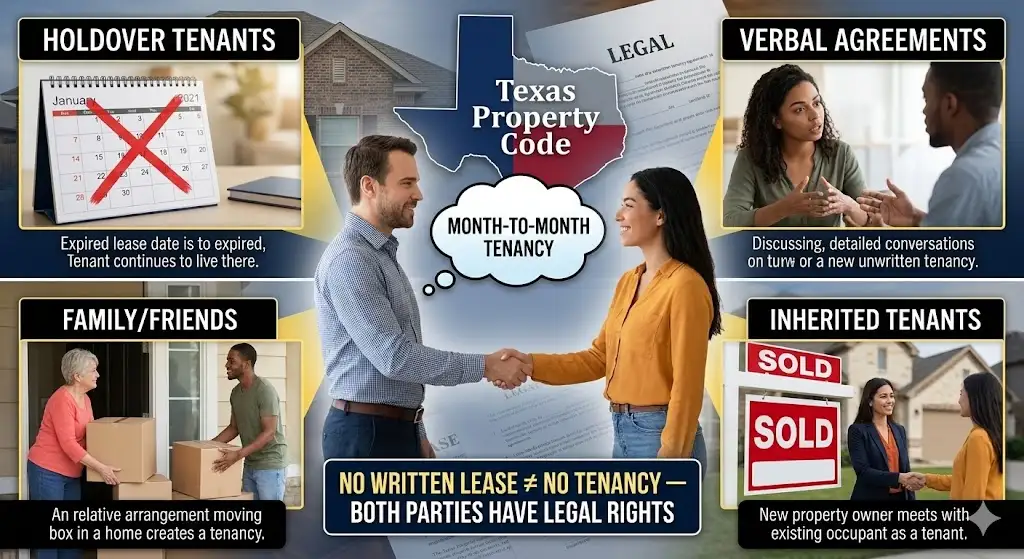
First, let's clear something up. Just because there's no written lease doesn't mean there's no tenancy. Under Texas Property Code, a verbal agreement or even a consistent pattern of paying rent can create what's called a month-to-month tenancy.
That means the tenant has legal rights — and so do you.
The most common situations where landlords deal with no-lease tenants include:
- Holdover tenants — people who stayed after their lease expired
- Verbal agreements that were never put in writing
- Family or friends who moved in informally
- Inherited tenants after buying a property
Each of these plays out slightly differently, but the eviction process follows the same basic legal path.
Step 1: Give Proper Written Notice
Before you can file anything with the court, you have to give the tenant official written notice to vacate. In Texas, for a month-to-month tenancy with no lease, that's typically a 30-day notice to vacate — though some circumstances allow for as little as 3 days.
When can you use a 3-day notice? If the tenant:
- Has failed to pay rent
- Has caused damage to the property
- Is engaged in illegal activity on the premises
The notice must be delivered in one of these ways:
- In person to the tenant
- In person to someone over 16 at the residence
- Taped to the inside of the front door
- Via certified mail
Pro tip: Always use certified mail AND post the notice on the door. Double documentation protects you if this goes to court.
Step 2: Wait Out the Notice Period
You cannot file for eviction before the notice period ends. This is non-negotiable under Texas law. If you skip this step or do it wrong, a judge can throw out your case entirely — costing you time and money.
Use this waiting period wisely:
- Document the condition of the property with photos or video
- Keep records of all communication with the tenant
- Avoid accepting any rent payments during this period (it could restart the clock)
- Consider running Tenant Screening Reports on anyone you're considering renting to in the future — learning from this situation is valuable
Step 3: File a Forcible Detainer Suit (Eviction Lawsuit)
If the tenant hasn't left by the end of the notice period, it's time to file an eviction lawsuit — officially called a Forcible Detainer Suit in Texas. You file this at your local Justice of the Peace (JP) Court.
Here's what you'll need:
- Proof of ownership (deed, property tax records)
- A copy of the notice you served and how you delivered it
- Documentation of the tenancy (text messages, payment records, etc.)
- Filing fee (typically $46–$100 depending on the county)
The court will schedule a hearing, usually within 10–21 days of filing.
Step 4: Attend the Eviction Hearing
Show up. Seriously. If you don't appear at the hearing, you lose by default.
Bring every document you have:
- Photos of property condition
- Communication records
- Proof of notice delivery
- Any witness statements if relevant
The tenant will have a chance to present their side too. Texas judges take these hearings seriously, so stay calm, stick to the facts, and let your documentation do the talking.
If you win — and most landlords do when they follow proper procedure — the judge issues a Judgment for Possession.
Step 5: Get the Writ of Possession
Even with a judgment in hand, you can't physically remove the tenant yourself. That's called self-help eviction, and it's illegal in Texas. No cutting utilities, changing locks, or removing belongings.
Instead, after the judgment, wait 5 days. If the tenant still hasn't left, you return to the JP Court and request a Writ of Possession. A constable will then post notice on the property, and if the tenant still refuses to leave, the constable physically removes them.
This final step usually happens within 24–48 hours of the writ being posted.
How Much Does It Actually Cost to Evict Without a Lease in Texas?
Here's a rough cost breakdown:
| Expense | Estimated Cost |
|---|---|
| JP Court filing fee | $46–$100 |
| Constable service fees | $75–$150 |
| Attorney fees (if hired) | $500–$5,000+ |
| Lost rent during process | Varies |
| Property damage repairs | Varies |
If the case is contested or the tenant appeals, costs can climb significantly. That's where hiring an Unlawful Detainer Attorney makes financial sense — they know the local courts, they know the defenses tenants use, and they can often speed up the process.
Should You Hire a Lawyer?
It depends on how complicated things get.
You probably don't need a lawyer if:
- The tenant isn't fighting it
- The property is clearly yours
- You're comfortable with paperwork and court appearances
You should seriously consider Landlord Legal Defense services if:
- The tenant claims they have a lease
- There are children, domestic violence claims, or disability issues involved
- The tenant has their own attorney
- You've received any legal threats or counter-notices
Many landlords use Eviction Protection Service plans that bundle legal support, notices, and court representation for a monthly or per-case fee. For landlords with multiple properties, it's often worth it.
Common Mistakes That Derail Evictions in Texas
Even when landlords follow the steps, small mistakes can cause big delays. Watch out for:
- Accepting rent after serving notice — this can void your eviction filing
- Not documenting notice delivery — if you can't prove it, it didn't happen in court
- Removing belongings or cutting utilities — immediate legal liability
- Filing in the wrong court — always JP Court for residential evictions
- Not following up on the Writ — the process stalls if you don't push it through
What Happens to the Tenant's Belongings?
After a writ is executed, the constable removes the tenant and places their belongings outside. Texas law does not require you to store them. However, you should document what was left and take photos — some tenants attempt to claim property was stolen or damaged.
How to Protect Yourself Going Forward
Once you've been through an eviction — especially a messy one — you'll want to tighten up your rental process. A few things worth doing:
- Always use a written lease, even for family or friends
- Run comprehensive Tenant Screening Reports before anyone moves in — background checks, credit history, and eviction records are your best filter
- Use a local landlord-tenant attorney to draft or review your lease
- Consider an Eviction Protection Service or Landlord Legal Defense subscription if you manage multiple units
Prevention is significantly cheaper than eviction.
Quick Reference: Texas Eviction Timeline (No Lease)
| Stage | Timeframe |
|---|---|
| Notice to vacate | 3–30 days |
| File at JP Court | Day 1 after notice expires |
| Hearing scheduled | 10–21 days after filing |
| Appeal window (if tenant appeals) | 5 days after judgment |
| Writ of Possession issued | After 5-day post-judgment wait |
| Constable removal | 24–48 hours after writ posted |
Total realistic timeline: 3–6 weeks if uncontested. Longer if appealed.
Wrapping It Up
Evicting a tenant without a lease in Texas isn't as chaotic as it sounds — as long as you follow the legal process step by step. Serve proper notice, file in the right court, show up prepared, and let the constable handle the physical removal. That's the formula.
If you've been wondering how to evict a tenant without a lease agreement in Texas fast, the honest answer is: fast means doing it right the first time. Skipping steps or cutting corners adds weeks, not saves them.
Got questions or been through this process yourself? Drop a comment below — your experience might help another landlord navigating the same situation. And if this guide saved you some stress, share it with a fellow property owner who could use it.