


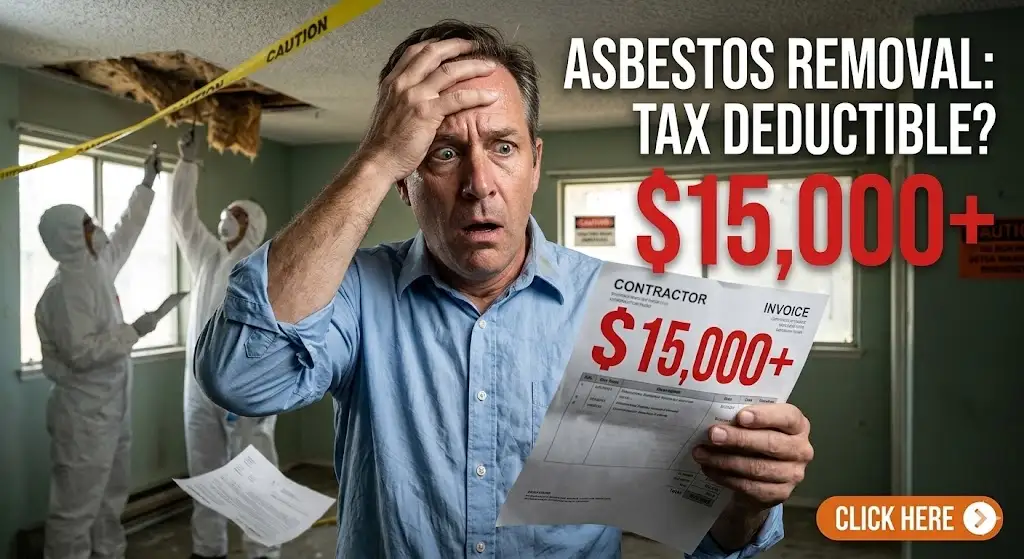
So you just found out your rental property has asbestos. Now you're staring at a five-figure quote from an EPA certified contractor and wondering: can I at least write this off?
Good news — in many cases, asbestos removal cost tax deduction for rental property is absolutely on the table. But the IRS rules are nuanced, and getting this wrong could cost you more than the abatement itself. Let's break it down in plain English.
Why Asbestos in Rental Properties Is a Big Deal
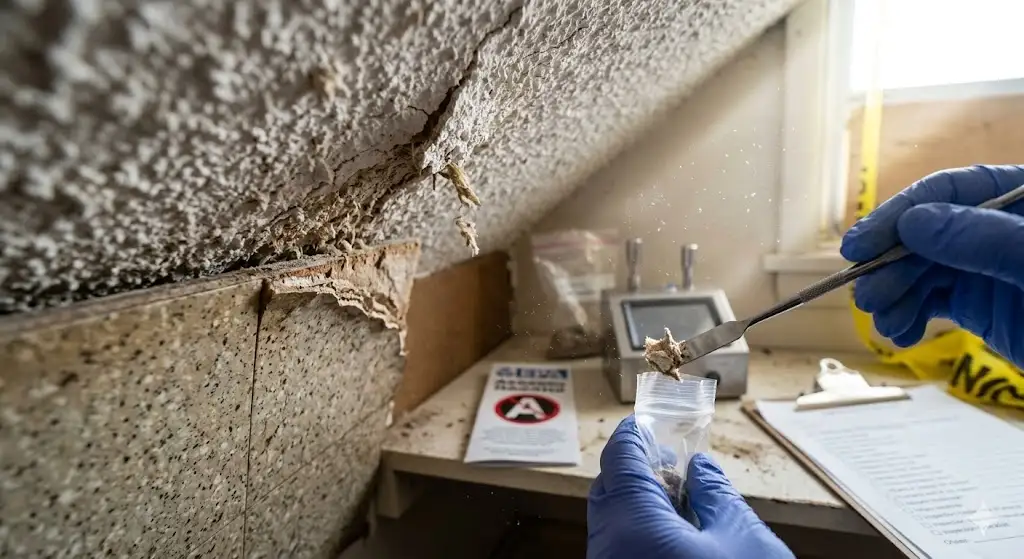
Before we get into the tax stuff, let's talk about what you're actually dealing with. Asbestos is a naturally occurring mineral fiber that was widely used in construction materials before the 1980s — insulation, floor tiles, ceiling tiles, pipe wrap, roofing shingles, you name it.
When those materials are disturbed or start to deteriorate, they release microscopic fibers into the air. Inhaling them over time can cause serious diseases, most notoriously mesothelioma — a rare and aggressive cancer of the lung lining. Mesothelioma legal compensation cases have resulted in multi-million dollar verdicts, which tells you just how seriously the courts (and the EPA) take this stuff.
As a landlord, you have a legal and moral obligation to address it.
The Core IRS Question: Repair or Capital Improvement?
Here's where it gets a little tricky. The IRS treats expenses differently depending on whether they're:
- Repairs/maintenance → deductible in the current tax year
- Capital improvements → must be depreciated over time (typically 27.5 years for residential rental property)
Hazardous material abatement — including asbestos removal — generally falls into a gray zone. The IRS looks at a few key factors:
Did the Work Restore the Property to Working Condition?
If the asbestos was making the property uninhabitable or unsafe, removing it could be classified as a repair, making the cost immediately deductible. The IRS Repair Regulations (the "Tangible Property Regulations" finalized in 2013) specifically allow deductions for amounts paid to keep property in its ordinarily efficient operating condition.
Did It Add Value or Extend the Property's Life?
If the abatement work also involved replacing materials with something better — say, swapping out old asbestos pipe insulation with modern high-efficiency insulation — that portion may need to be capitalized as an improvement.
The safest approach: Work with a tax professional to separate the abatement costs from any betterment costs and document everything clearly.
What the IRS Actually Says About Environmental Hazard Removal
The IRS has addressed environmental cleanup costs in several rulings and the Tax Cuts and Jobs Act didn't fundamentally change this framework.
Under IRC Section 162, ordinary and necessary business expenses are deductible. Removing a hazardous material that prevents you from renting out (or safely maintaining) your property qualifies as an ordinary and necessary expense for most landlords.
Additionally, IRC Section 198 — the Environmental Remediation Cost provision — allows certain contaminated site cleanup costs to be deducted as current expenses rather than capitalized. While this was originally designed for "brownfield" sites, the principles overlap with rental property hazardous material abatement in some cases.
Important: Section 198 has had on-again, off-again Congressional authorization. Verify its current status with your CPA for the 2026 tax year.
How to Claim the Deduction: Step by Step
1. Hire an EPA Certified Contractor
This isn't optional — legally or for tax purposes. The IRS expects that work of this nature is done by qualified professionals. An EPA certified contractor creates a paper trail that legitimizes your deduction. Ask for a detailed invoice that breaks down:
- Inspection and testing fees (environmental inspection cost)
- Labor for actual removal
- Disposal fees
- Any encapsulation work done instead of full removal
Each of these line items may be treated differently for tax purposes.
2. Get an Environmental Inspection First
Before removal, you'll likely need a formal environmental inspection cost — typically ranging from $400 to $800 for a standard assessment. This fee is deductible as a business expense on Schedule E (Supplemental Income and Loss), where you report rental income and expenses.
3. Document Everything
Keep copies of:
- The inspector's written report
- The contractor's license and EPA certification
- All invoices and payment records
- Before-and-after photos of the affected areas
- Any communication with local or state environmental agencies
If the IRS ever questions your deduction, this documentation is your best defense.
4. Report on Schedule E
For most individual landlords, asbestos removal costs go on Schedule E, Part I. If the IRS allows it as a current deduction, it reduces your net rental income directly — which lowers your taxable income dollar for dollar.
If the expense must be capitalized, it gets added to your property's cost basis and depreciated over 27.5 years (or potentially a shorter recovery period if it's classified as a separate asset class).
The Mesothelioma Legal Compensation Angle Landlords Miss
Here's something most tax guides don't mention: if a tenant, contractor, or previous occupant has been diagnosed with mesothelioma or another asbestos-related illness due to exposure in your property, you could be facing significant mesothelioma legal compensation liability.
Legal defense costs and settlements related to your rental property are generally deductible business expenses under IRC Section 162. But the exposure risk — financial and human — is another powerful reason to address hazardous material abatement proactively rather than reactively.
Proactive removal is almost always cheaper than litigation.
What If the Property Was Uninhabitable During Abatement?
If you had to take the unit off the market while the work was being done, you may be able to claim a rental income loss during that period — especially if you had a tenant lined up or had to break a lease. Consult a tax professional about whether this loss is deductible under the passive activity loss rules.
State-Level Deductions and Credits: Don't Leave Money on the Table
Beyond federal deductions, many states offer additional incentives for hazardous material abatement on rental properties. Some states provide:
- Direct tax credits for asbestos removal costs
- Expedited permitting for EPA-certified abatement work
- Property tax reassessment freezes during remediation
Check with your state's department of revenue or a local CPA familiar with your state's environmental tax incentives.
Typical Asbestos Removal Costs in 2026 (And What's Deductible)
Here's a rough breakdown of what you might be spending — and how it's typically treated for tax purposes:
| Expense | Typical Cost Range | Tax Treatment |
|---|---|---|
| Environmental inspection | $400–$800 | Deductible (Schedule E) |
| Asbestos testing (lab fees) | $25–$75 per sample | Deductible |
| Full removal (per sq ft) | $20–$65 | Likely deductible or depreciable |
| Encapsulation (per sq ft) | $2–$6 | Likely deductible |
| Disposal fees | $10–$50 per bag | Deductible |
| Post-removal air testing | $200–$500 | Deductible |
Costs vary significantly by region, scope, and the type of asbestos-containing material involved. Always get at least three quotes from EPA certified contractors.
Common Mistakes Landlords Make With This Deduction
Mistake #1: Not separating abatement from improvement costs. If you replaced asbestos insulation with a better product, only the abatement portion may be currently deductible.
Mistake #2: Skipping the environmental inspection. Without a documented inspection, the IRS may question whether the hazard actually existed.
Mistake #3: Using an uncertified contractor. This creates legal liability and weakens your tax deduction documentation.
Mistake #4: Forgetting state deductions. Federal isn't the only game in town.
Mistake #5: Not tracking the environmental inspection cost separately. Inspection fees are deductible regardless of whether removal ends up being required.
Wrapping It Up
So — is asbestos removal cost tax deductible for rental property? In most cases, yes. Whether it's a full current deduction or a capitalized improvement depends on the specific facts of your situation, but either way, the IRS recognizes that hazardous material abatement is a legitimate, necessary cost of running a rental business.
The keys to maximizing your deduction are: hire an EPA certified contractor, document your environmental inspection cost, and work with a qualified tax professional who understands both the IRS rules and your state's laws.
Don't let the complexity of asbestos removal tax deduction rules stop you from taking money you're legally entitled to. You did the right thing protecting your tenants — now protect your wallet too.
Thanks so much for reading this far! If you found this helpful — or if you've been through the asbestos removal process yourself — drop a comment below and share your experience. And if there's something I missed or got wrong, I genuinely want to know. Your input makes these guides better for everyone.
Disclaimer: This article is for informational purposes only and does not constitute tax or legal advice. Consult a licensed CPA or tax attorney for guidance specific to your situation.