


Hiring a contractor should make your life easier — not turn into a nightmare that costs you thousands of dollars extra. If you're dealing with shoddy tile work, unfinished framing, or a roof that leaks after "repairs," you're probably wondering: can I actually sue for this, and where do I even start?
Suing a contractor for bad work is absolutely possible. The real question is which court is right for your situation — and that depends heavily on how much money you lost. This guide breaks down small claims court vs. civil court, when each makes sense, and what legal options exist beyond the courtroom.
When a Contractor's Work Crosses the Legal Line
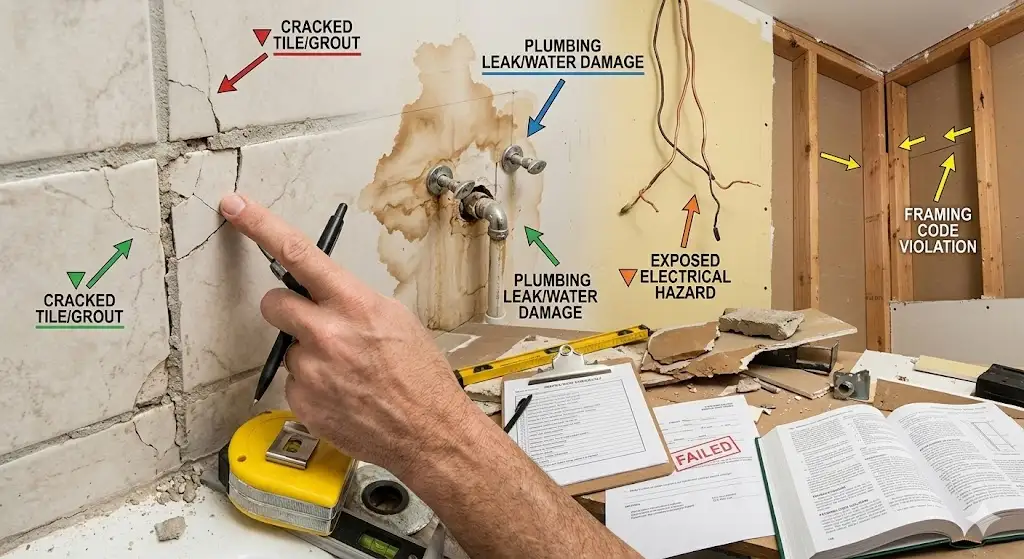
Not every botched paint job warrants a lawsuit. But certain situations absolutely do.
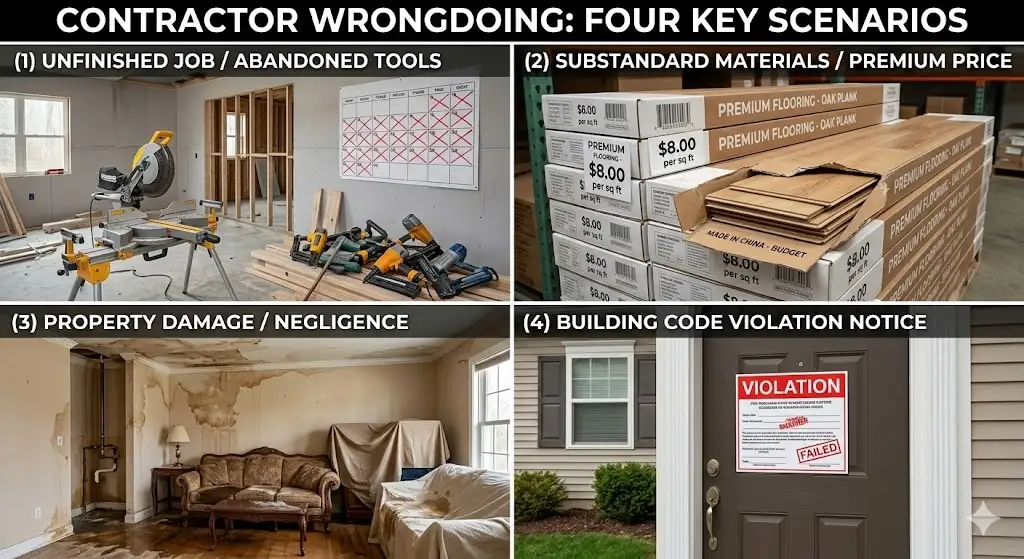
Construction defects — a legal term covering poor workmanship, code violations, structural failures, and material defects — are grounds for legal action when they cause real financial harm. If your contractor:
- Left a job unfinished and disappeared
- Used substandard materials while charging for premium ones
- Caused property damage through negligence
- Violated local building codes
…then you likely have a valid breach of contract lawsuit on your hands.
Before filing anything, document everything. Photos, texts, contracts, invoices, inspection reports — gather it all. Courts live and die by evidence.
Small Claims Court: The Fast, Cheap Option
Small claims court is specifically designed for everyday people to resolve disputes without hiring an attorney. No complicated procedures, no drawn-out discovery process.
What's the Small Claims Limit?
This varies by state, but here's a general snapshot:
| State | Small Claims Limit |
|---|---|
| California | $12,500 |
| Texas | $20,000 |
| Florida | $8,000 |
| New York | $10,000 |
| Illinois | $10,000 |
Most states fall somewhere between $5,000 and $25,000. You can find your state's exact limit at your local courthouse website or through your state's judicial branch online portal.
When Small Claims Makes Sense
Go this route if:
- Your total damages are within the limit
- You have clear, documented proof (contracts, photos, receipts)
- The contractor is still operating and locatable
- You want a resolution within weeks, not years
Filing fees are usually between $30–$100. You represent yourself, explain the situation to a judge, and typically get a ruling the same day.
Drawbacks to Know
Small claims court can't award attorney fees in most states, and collecting a judgment if the contractor doesn't pay voluntarily is a whole separate process. Winning doesn't automatically mean getting paid.
Civil Court: When the Damage Is Bigger
If your losses exceed the small claims ceiling — or the situation involves complex construction defect claims — you're looking at civil court, specifically the general civil division or superior court depending on your state.
What Civil Court Offers That Small Claims Doesn't
- Higher damage awards (no cap in most civil courts)
- Ability to pursue punitive damages in egregious cases
- Legal mechanisms for discovery — subpoenaing records, deposing witnesses
- Enforceability across state lines if needed
This is where a construction defect lawyer becomes essential. These are attorneys who specialize in contractor disputes and know exactly how to build a case around building codes, expert testimony, and contract law.
Yes, attorneys cost money upfront. But many construction defect lawyers work on contingency for larger cases — meaning they take a percentage of what you win, not an hourly rate. Worth asking.
Other Legal Weapons in Your Arsenal
Lawsuits aren't your only option. Sometimes they're not even your best one.
File a Contractor Bond Claim
Most licensed contractors are bonded — meaning they carry a surety bond that protects customers if the contractor fails to complete work or causes damage. Filing a contractor bond claim can get you compensated without ever stepping into a courtroom.
Steps to file:
- Find the bonding company (your state contractor licensing board has this info)
- Submit a written claim with documentation
- The surety investigates and may pay out directly
Bond claims have limits (usually equal to the bond amount), but they're faster and cheaper than litigation.
Try Mediation First
Mediation services cost significantly less than a full lawsuit — typically $150–$300 per hour, split between both parties. A neutral mediator helps both sides reach a voluntary agreement.
Mediation is especially useful when:
- You want a faster resolution
- The relationship with the contractor is salvageable
- You'd prefer a private settlement over public court records
Many courts actually require mediation attempts before allowing a construction case to proceed anyway.
File a Complaint with the Licensing Board
This won't get you money directly, but filing with your state contractor licensing board can:
- Trigger an official investigation
- Put pressure on the contractor to settle
- Potentially result in license suspension or revocation
For contractors who rely on their license to keep working, this threat carries real weight.
The Breach of Contract Lawsuit: What You Need to Prove
Whether you're in small claims or civil court, a breach of contract lawsuit against a contractor typically requires proving four things:
- A valid contract existed — written or verbal (written is much stronger)
- You fulfilled your obligations — you paid or were ready to pay
- The contractor breached the contract — they didn't deliver what was promised
- You suffered damages — financial loss you can quantify
Courts don't care about your frustration. They care about provable losses. Get two or three licensed contractors to give you written estimates for fixing the bad work — those estimates become your damage figures.
Common Mistakes That Hurt Your Case
Even people with valid claims lose because they make avoidable errors. Don't:
- Pay in full before work is complete — always hold final payment until job is done and inspected
- Communicate only verbally — text or email everything so there's a paper trail
- Wait too long — every state has a statute of limitations on construction defect claims, typically 3–10 years
- Throw away defective materials — physical evidence matters in court
Which Path Is Right for You?
Here's a quick decision framework:
Use small claims if: Damages are under your state's limit, evidence is straightforward, and you want a quick resolution without legal fees.
Hire a construction defect lawyer if: Damages are large, the contractor disputes everything, or building code violations are involved.
File a bond claim if: The contractor is licensed and bonded, and you want a non-court option.
Try mediation if: Both parties are somewhat willing to negotiate and you want to avoid the time and cost of litigation.
Wrapping It Up
Getting burned by a bad contractor is infuriating — but you're not powerless. Whether you're suing a contractor for poor workmanship through small claims or pursuing a full civil case, the key is acting fast, documenting everything, and understanding which legal path fits your situation.
The small claims limit is your first checkpoint. If your losses fit under it, the process is surprisingly accessible. If they don't, a construction defect lawyer can assess whether you have a strong case worth pursuing in civil court.
You deserve quality work for the money you paid. Don't let a shady contractor walk away without accountability.
Thanks for reading! Got a contractor dispute story or questions about your specific situation? Drop them in the comments — your experience might help someone else going through the same thing.